

Header art: A quilted image of bell hooks hangs in the bell hooks center at Berea College, created by Rosy Petri. Petri, a mixed-media artist and storyteller, was the center's inaugural Artist in Residence in 2021.
I find myself back at the library to begin to express the deep learnings conveyed to me through that late literary giant Dr. Gloria Jean Watkins, better known by her pen name, bell hooks. I had a unique and cherished opportunity to spend time with the published and unpublished works of bell hooks at the Special Archives Library at Berea College. It seems only right that now that it is time to write and to share the learnings from the experience, I find myself at the Oakland public library surrounded by people that I share a place with. Join me as I wade through a sea of reflections, practical learnings, and threads of meaning gifted to me through the experience.
It's been three weeks since I completed my time with the archives, and it is only now that the thoughts, the learnings, and the experience are settling. As with any research project or learning effort, I found that each topic I encountered led to additional issues, different readings, and deeper lessons. I will be weaving connections through bell hooks' works for a very long time. bell hooks' writing has never been shallow; it speaks to unearth the depths of humanity—the things she writes about resonate with me on a personal, group, and societal level. For me, this means that her work lends itself to multiple forms of processing.
I was within walking distance to where a once vibrant hub built by bell hooks was alive—I imagined being there, sitting and learning from her. I gave thanks for all that she was and hope to be like her in my community.
Because of this, in approaching the archives, I knew that my mission was to remain steady in engaging with her writings. I held closely the mantra "not to consume but to be present with" to learn from what I could within the time I had. This was a hard commitment to keep.
I applied to be a fellow within the bell hooks paper residency with a great deal of admiration for bell hooks' work, her teaching style, and her approach to social ills. Her scholarship is matched only by a deep universal love and desire for building, for co-creating a more just world. When I applied, I had three key items that I was looking to learn from my time with her works. This paper will share insights from the questions I explored, along with some of the timely and textured insights that bell graced me with.
I went to Berea, Kentucky, with three questions in mind: the first, how does bell hooks' work contribute to or directly overlap with the Othering and Belonging Institute's work on belonging? The second: What actions of bridging did bell hooks engage in? And the third: What lessons does bell hooks' archive offer to me, and to us, in the current times?
While I went with these questions in mind, bell hooks offered me not only the chance to learn from her writings, but she, in her incredible kindness and generosity, offered me the rare opportunity to be introduced to Dr. Gloria Jean Watkins of Hopkinsville, Kentucky, a person from a small town, and of the world. I was offered the chance to engage in a literary conversation and learn from a woman who owed me nothing but took great care to package her life, her works, and her trials so that people like me could learn from her experiences. bell hooks gave me the chance to advance a little further the world-building endeavor she committed her life to, one where we speak our truths, critique the things we love for the sake of their improvement, and participate in building a world where domination is not the sought way of being. bell hooks offered an alternative in which she encouraged living with a commitment to continual learning, to love, to the willingness to look at, to befriend, and to address the things that we might be afraid of (within ourselves and within society), and what it looks like to live a life filled with generosity of spirit across any faith.
bell hooks papers are held in Berea College's Special Collections & Archive at Hutchins Library in Berea, Kentucky. They comprise 17 boxes of business and personal correspondence, published and unpublished writings, news clippings, photographs, and other records documenting the life, research interests, and career of Dr. hooks (Gloria Jean Watkins 1952-2021).1 I spent one week, 30 hours of committed time alone, engaging with bell hooks' papers and the whole week steeping in the place where bell lived out her final years.
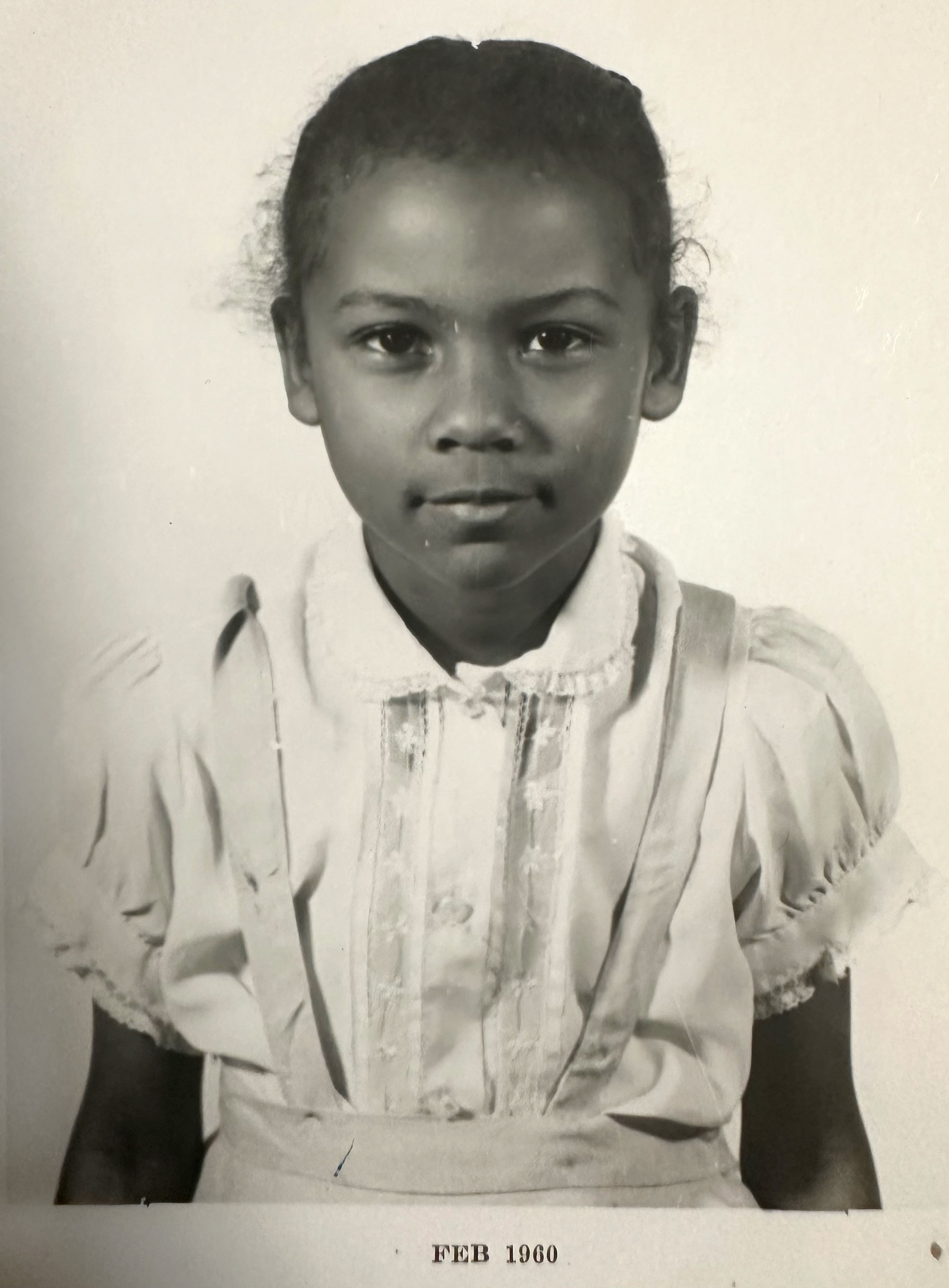
I began my research with the archives by reaching for the personal. I wanted to ground myself in connecting with bell through photos, seeing her family, getting to know her handwriting, and understanding what she found essential for representing herself. I found the most joy in seeing the evolution of photos of her as a young girl,2 to a college student, to a world-renowned public intellectual and cultural critic. In my favorite photo, bell could not have been more than 8 years old. You can see her face looking directly into the camera, exuding an approachable, loving presence while maintaining a steady and direct poise.
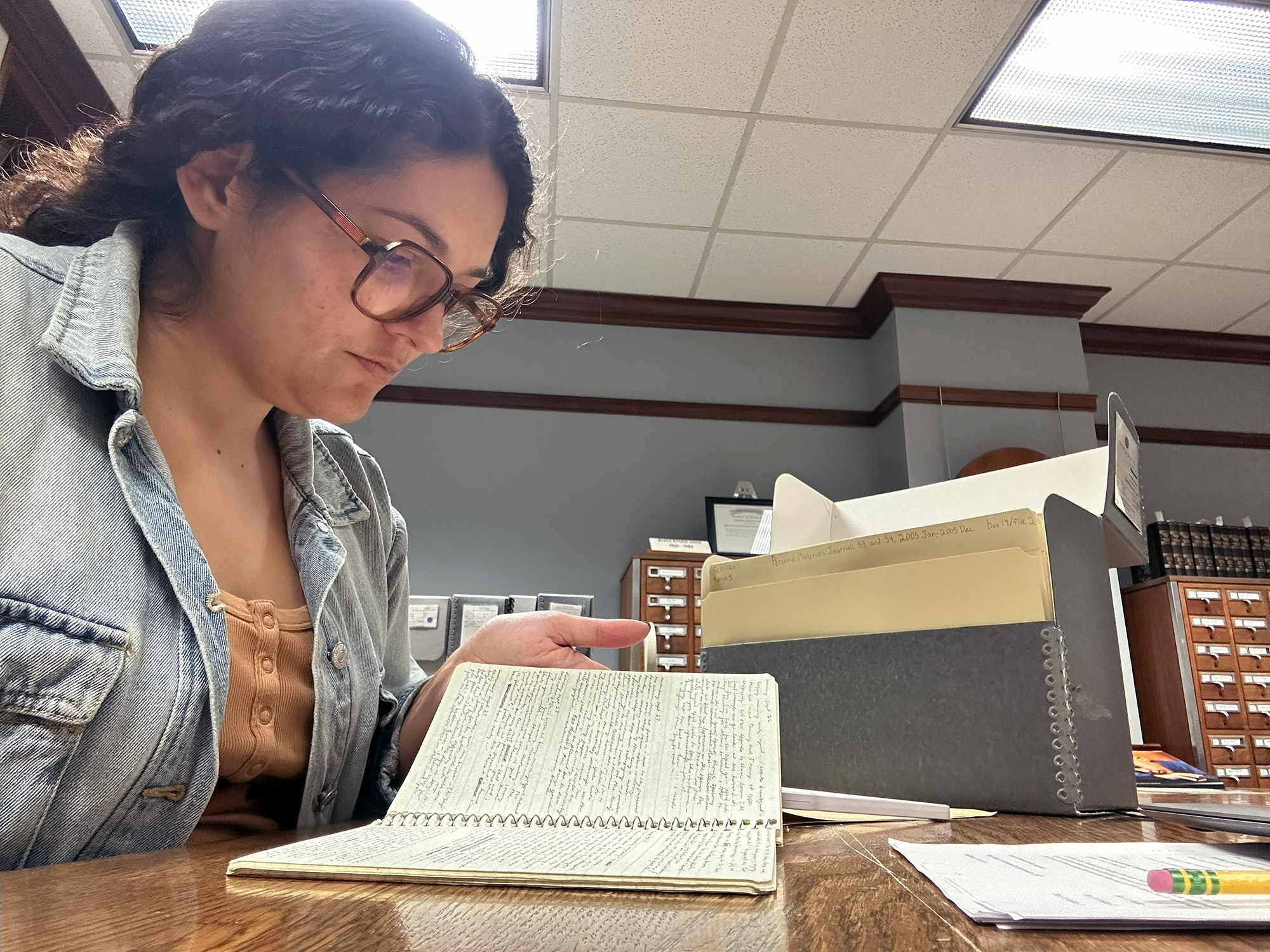
I moved towards the correspondence boxes, to the articles, watched VHS tapes of bell hooks' speaking engagements, to the unpublished documents and manuscripts, to the personal journals (sometimes only seen through a magnifying glass), back to the articles, and closed where I started–looking at being reconnected to bell hooks, the person.
What I now fully understand about bell hooks is that learning and writing were not something she chose; they chose her. She embraced the calling, knowing that her work could positively impact others. I now see bell as a loving and purpose-driven conduit of information. She read at least one book of non-fiction per day, engaged in writing every day (the proof was illustrated through her personal journals (1982-2014), publishing over 40 books, manuscripts, poems, and plays. bell's gift was not only to process information for herself but to transform it into accessible information that could and would touch the hearts and lives of many.
Before I go on about the insights gained from bell hooks as a person and intellectual, let me get back to what I promised to write about: The research questions I asked of the archives.
Belonging
I have come to know belonging well, personally and professionally. As a person, I can attest to having been searching for it for as long as I can form memory. I imagine that most of us have been. The part of me that longs to be seen, to be cared for, to be respected, and to have agency to bring positive change into the world is a deeply held part of my being. I understand that my personal cultivation of belonging is beautiful and necessary, but it is not the only goal. Belonging is something felt; it is subjective, yet it is also supported or denied through groups, structures, and systems. My work is committed to advancing belonging in places at the personal, group, structural, and societal levels. Advancing belonging without othering is one of the most important callings we can individually and collectively realize.
I applied to the bell hooks paper Residency in large part because of bell's book, belonging: a culture of place. It is through this book and her writing that I was introduced to Kentucky with a deep sense of the importance of place. Within this book, bell hooks shares about her home state and the decision process she went through in choosing to return to the state of her birth. When bell returned to Kentucky, she was already a world-renowned author, cultural critic, professor, and public intellectual. She had lived all over the world, and could have chosen to settle seemingly anywhere of her choosing. And yet, she chose a small town as the place she would live out her time on earth, a place where she felt a sense of belonging and could offer it to others.
I sought to learn more about bell's way of being through talking with people in Berea. Because it is a smaller town, and bell's persona was so large, I imagine her being somewhat hard to miss. And yet, no matter how accomplished bell was, she continued to make herself available and accessible to everyday people from all walks of life.
Berea was the place of bell's return, itself being a special place, having significant commitment to inclusion within education from its inception. Berea College is the first college in the South to allow people from all races to learn together and people across genders to learn with one another before it was required by law.3 While not perfect in the execution of its goals, Berea College's abolitionist founders pushed for structural inclusion long before society approved of it. This drive, this pursuit for structural and practiced inclusion, set the groundwork for bell to choose this place as her home.
The City of Berea, with about 16,500 people, is surrounded by mountains and small towns. It's an environment that's beautiful, situated just at the foothills of Appalachia. This visit was my first time in this part of the country, my first time driving through this type of landscape, and my first experience in a more Southern rural space. While many parts of this city were unfamiliar to me, having grown up in a very small town in New Mexico, it reminded me of the connected nature that a small-town community fosters. The stop signs felt like meeting points. The restaurants were ultra-local, with staff who know people by name or order. More like Berkeley as a college town, it felt like a different city when school was in session than when it was not. Students infused the city with youthful vibrancy, more gender expressions, and more racial and ethnic diversity.
At the Othering and Belonging Institute, we have defined belonging4 to have four key elements: inclusion, connection, recognition, and agency. While sitting with bell's works, I found direct overlap in her works with all four elements and more. I found through bell's archive many examples where she brought to life each element. While the list below is not comprehensive, I am sharing a few direct links from bell hooks' works and writings to the way our Institute is working with our current understanding and socialization of belonging.

Inclusion: bell worked towards intellectual, spiritual, and environmental inclusion with students and with people from many walks of life. It was said that her home was a hub of inclusion, where you could find students, family, celebrities, and anyone in between. It's notable that the bell hooks' center at Berea College is a place where the inclusion of all types of people and a commitment to learning across topics are staples of their design and practice. A place designed and dedicated to a woman who believed deeply in inclusion and practiced it and built for it in many ways. More directly, bell experienced, understood, and taught about social and structural inequities. Her version of inclusion called for and built pathways to implement equity and repair the past harms of exclusion.
I found the most direct learnings from bell's commitment to connection and recognition.
Through the archives, there were multiple boxes of correspondence between bell and friends, family members, and people she had met through her travels or engagements. It was referenced many times as the opening line in the correspondences: "Thank you for encouraging me to write." I gathered that bell was open to staying connected to people, to hearing from them, to learning what they were going through and how her work impacted their lives. It was beautiful to see how many classrooms wrote to her to thank her, to ask questions, to make a connection. In some cases, she wrote back. For most, though, I can only imagine that she sent a reply, but by the nature of sending something to someone, the note itself was not available to be seen. I imagine the keepers of the response holding these letters as dear keepsakes of a connection made with an inspiring person.
Recognition: there was much referenced within the archives of bell being recognized. She received numerous acknowledgements and awards, including being inducted into the Carnegie Center Kentucky Writers Hall of Fame.5 Knowing of her deep love for Kentucky and her work in presenting herself over time not only as a writer but as a Kentucky writer leads me to believe that this award was significant. In her book, belonging, a place of culture bell hooks wrote:
"Like poke, a Kentucky favorite which changes the flavor when added to turnip, collard, or mustard greens, the hillbilly culture, the backwoods ethos is that particular ingredient which shapes and forms me. It is that foundation that leads me to embrace wholeheartedly the reality that I am indeed a Kentucky writer."6
There were also references to when bell had not been recognized to the extent deserved. As a black woman, feminist, and public intellectual, bell reflected on not receiving the same level of intellectual credit as her male counterparts, with whom she was often discussed in relation. Highlighting the way that patriarchy frequently denied recognition of women in the same way as men, and how racism often did the work of excluding the names, history, and recognition of the work and contributions of black people. Much of her work involved personally ensuring the recognition and uplifting of black culture and lineage holders, and her writing was dedicated to offering this recognition.
Agency: This was the part that I personally found so much inspiration from my time with bell hooks. In many of the writings and exchanges with others, I saw and felt a person who knows their worth, recognizes their voice has value, and asserts it. bell's works and words were never for the advancement of self alone. She expressed her agency in ways that ensured you knew she was present, that you were not going to run her over, and that she was present for the benefit of many and was not afraid to challenge slights or injustice. I found the most fire in my spirit, feeling that there wasn't a damn thing you could tell bell hooks without an immediate whiplash into her articulating and demanding her own agency and the structural transformation that supports the ongoing agency of all.
Bridging
bell hooks was a bridger in multitude ways. Here are a few examples of how she lived into being a bridger.
bell was a bridger in thought; she found joy in staying curious, understanding new ideas, and being open to the multiplicity that she and others hold. bell's intellectual seeking led her to be a natural bridger, someone who did not accept a single story as the story, but continuously sought to learn more.
One of the most significant contributors to bridging is maintaining a commitment to keeping one another's humanity at heart, even through disagreement. bell knew deeply and wrote about humanizing one another as one of the most essential ways to move away from acts of othering. "It's about humanization. And I can't think of another way to imagine how we're going to get out of the crisis of racial hatred if not through the will to humanize."7 While bell spoke specifically about race and racial hatred, humanizing each other across many lines of difference will help us move through the multiple crises of perceived and real differences we find ourselves in today.
bell hooks was a spiritual bridger. bell sought to put her spirituality into practice on this earth and to engage in love for all people. She was astutely aware of the social problems of our world and committed to working towards their improvement. bell approached social justice through a spiritual lens. I found camaraderie through reading about her spiritual search, as the answers revealed over time, and her demonstrated growth in application:
"As a young adult woman able to be critical of Christianity, I searched for a spiritual path that would offer an alternative to the fall/redemption model. That search led me to teachings and to spiritual leaders and guides who taught me about other paths. I learned about the mystical dimensions of Islam, studied about Buddhism, Hinduism and other religious traditions. My current spiritual practice grows out of combinations of various traditions."8
I sought to learn more about bell's way of being through talking with people in Berea. Because it is a smaller town, and bell's persona was so large, I imagine her being somewhat hard to miss. And yet, no matter how accomplished bell was, she continued to make herself available and accessible to everyday people from all walks of life.
When speaking with Chris Miller, Green at the , Director of the Loyal Jones Appalachian Center at Berea College, he shared reflected that one way that bell engaged in building relationships with local Appalachian people was through a shared love and ancestral practice of quilting. While a distinguished professor at the Loyal Jones Appalachian Center, she held a quilting event where she and women of Appalachia shared the stories of their quilts, their history, and got to know each other more personally—an event bridging event grounded in connecting across difference.


Lastly, bell bridged with students and seekers of meaningful conversation. bell's home was a hub where both wanted and unwanted guests would show up, with bell making herself available either way. I heard a reference of her sitting on the couch, with students sitting in a circle around her or on the floor, exchanging ideas, showing up to be challenged, and having meaningful conversations. This way of being illustrates bell's deep love for people, her commitment to discussion, and her openness to sharing the wisdom she carried.
In unplanned alignment, I found myself staying near bell hooks' home. I was within walking distance to where a once vibrant hub built by bell hooks was alive—I imagined being there, sitting and learning from her. I gave thanks for all that she was and hope to be like her in my community. To not only have a home, but to have a space—a place where meaning, love, and challenges are discussed, and dreams and aspirations are made practical, where we create a world that might not exist outside of its doors… yet.
In short, I found what I was looking for and so much more. bell hooks is a legacy holder of the belonging I know and believe in. This did not come as a surprise; our director, john a. powell, and bell hooks existed in the public intellectual space together for many overlapping years, and they were dear friends. They publicly and personally exchanged views on their work in advancing belonging and, I imagine, so much more. bell hooks was one of the first keynote speakers at OBI's conference in 2015.
The gift, though, was learning more about her approach to belonging, about her influences and sources of inspiration. To learn from what she made available, describing her pursuit of belonging within herself, with her family, and with the world, ensuring that belonging is built structurally. bell pushed for systems and structures not to do the work of domination or exclusion, but instead work in support of our collective well-being and liberation.
While this whole piece has been an effort of weaving and offering some of the multitude of lessons learned through my time with bell hooks' papers, I offer my best go at the current key takeaways that I found towards answering my final question: what do bell's papers offer to us as insight in our current times?
There is power in knowing and naming systems of harm
As an educator, an intellectual, a writer, and a speaker, bell was often heard using the phrase "Imperialist White Supremacist Capitalist Patriarchy," specifically naming these systems together to show their interlocking relationship. At some point in any one of bell's talks, you could count on this phrase being named. Much of bell's work was centered on understanding, sharing, and teaching about these systems of oppression individually and collectively.
In much of my work at OBI, when considering or working with groups to establish an orientation towards belonging without othering, we don't often speak to the naming of the specific and multiple forms of harm that groups aim to move away from. bell reminded me that while we might be able to use frames like Othering because of its ability to be reflective of the common mechanisms and produced outcomes of so many different types of harm and marginalization, it is still essential to understand each kind of harm individually, especially the ones that shape communities and nations so that we can recognize them when they repeat themselves and challenge the way they take root in our relationships and organizations—recognizing, naming and addressing systems and structures of harm so that they can be transformed into something better, more life serving.
Expand what you dream about, who you care about, and what you build towards. Don't be bound by false beliefs of individual or collective limitations; we are, in fact, limitless.
For me personally, bell emphasized the seemingly ingrained presence of and issues with patriarchy as a structure of domination. She helped reveal the direct and timely link that our world is being pulled into a greater demand and practice of patriarchy, specified gender roles, and larger amounts of violence enacted on one another as means of domination and superiority. This is a topic I am still processing, but I would be remiss not to name it directly as a lesson learned from bell hooks. I want to offer a quote as a sample of works on the topic that have sparked deep curiosity and parallel to the current time concerning the overall well-being of men and boys in our society:
"Patriarchy as a system has denied males access to full emotional well-being, which is not the same as feeling rewarded, successful, or powerful because of one’s capacity to assert control over others. To truly address male pain and male crisis we must as a nation be willing to expose the harsh reality that patriarchy has damaged men in the past and continues to damage them in the present."9
When you want to reach more people, try different forms of storytelling
bell hooks was a prolific writer, speaker, storyteller, artist, poet, and playwright. She had a desire to connect with people and to share and make meaning in various ways. bell was a person who believed in the multitude of people and found power in her ability to connect through accessing the multitude she contained. She took pride in having multiple voices: one in bell hooks the writer, another in bell hooks the speaker. People were often disoriented by the power she wielded through her writing voice and the contrast and softness of her speaking voice. bell did not see this as a limitation; she used both aspects as parts of herself and as different modalities of connecting with people.
bell knew the power of story, and that sometimes reaching people had to take a different form than a book or an article. She took to poetry as a means of expression and sharing, small, lined verses that could carry the weight of a bell hooks book. She painted, imbuing meaning in the paintings, and told stories through her grandmother's quilts. When there is a story to tell, be creative, be open, and find a pathway to meet your target audience. Today, we are in desperate need of inspiring and collective stories. We can't be flooded with breaking; we must dig deep to tell different stories of an alternative future, of the world we can build together.
Courageousness is a must. Dissent is required. People are and have been hungry for the truth.
bell hooks taught me, instilled within my being the understanding that courage is a must. From being a young girl to a wise woman, bell demonstrated a deep curiosity about expanding her knowledge of what is happening in the world and what it looks like to move forward with integrity through them. bell paid tribute through her writings to leaders who inspired her, such as Sojourner Truth, Dr. Martin Luther King, Thich Nhat Hanh, and many others who stood firm in an ethos of love and took non-violent action towards what they believed in. bell saw herself as a dissenting voice, a person who came to know and critique topics, sharing her truth on subjects perceived to be taboo in public discourse:
"I feel that to tell the truth is to transgress. In a culture of domination where people just lie, lie, lie, to tell the truth is to move against boundaries."10
This quote and many other versions of her words, which call for the practice of truth speaking and moving with intention towards a collective good, struck me as deeply aligned with what our world is facing at present. Often presented with a sea of information and misinformation, we're living in a time where people desperately seek the truth, and it can be hard to find or to rely on. bell showed me that our times call for courage, for having thoughts and questions that might differ from the status quo, and for asking and discussing them for the sake of meaning-making, engagement, and better world-building. An important note I took from this is that each of us has a truth. It's not about forcing a superiority of truth holding, but instead listening and being available to hold the multiple truths of our time—this is, of course, without the active desire to deceive.
"Love is always the place where I begin and end"11
Love is not soft or weak; there is required strength in committing to love. bell wrote extensively on the topic. To learn more, please engage with her writings. For the sake of the lesson conveyed to us, we'd benefit greatly by digging into the strength of love, loving ourselves, loving each other, our future, and the earth–from start to finish and everywhere in between.
Dare to dream and build a legacy to be proud of
bell's papers reminded me that it is important to document our stories and lives, and to look to those who have come before us as part of our interconnected human path. bell's work was full of historical references to human history that were bleak and centered on wars, fascism, domination, and many different types of suffering. bell connected those times to people, groups and institutions who dared to face those problems, that worked towards reshaping those hard times towards better ones, to expressions of joy also existing at the same time as suffering. bell reminded me that looking to our ancestors in history and towards our future can better equip us to be the most contributive and purposeful in our present–no matter its shape.
She showed me the power of documentation and legacy contribution. As an individual, yes, dream and build the legacy that will lift those closest to you and document so that others who care about you or who might seek to learn can have that opportunity–but don't stop there. Expand what you dream about, who you care about, and what you build towards. Don't be bound by false beliefs of individual or collective limitations; we are, in fact, limitless. Be the dreamers and builders who lean into world-building for and with each other in a way that no one else could–people that our descendants will look to for lessons learned showing how we collectively moved through very tough times, together.
Endnote
I want to sincerely thank the bell hooks center, Dr. Shadee Malaklou, and the Special Collections and Archives of Berea College for making the fellowship possible and for your care while on site. I want to thank bell hooks for her care, foresight, and work in making her writings and history available to people after her time on this earth was complete. It is a big undertaking to do the writing, speaking, and engagements she did while also ensuring that her writings, photos, journals, and more remained accessible. Additionally, I want to share a special thank you to Chris Miller and Chris Green and the Loyal Jones Appalachian Center, as well as Megan Feifer and Abby Houston, for their work on preserving the archive. I also extend my gratitude to the city of Berea for welcoming me and allowing me to learn from you. Thank you to Dr. Linda Strong-Leek and the bell hooks Institute for taking the time to answer follow-up questions. Lastly, much appreciation to the Othering and Belonging Institute for their support of my learning through this special research project.
- 1Finding Aid to the bell hooks papers, bell hooks Papers, Berea College Special Collections and Archives, Hutchins Library, Berea, Kentucky, USA, accessed October 16, 2025, https://bereaarchives.libraryhost.com/repositories/2/resources/137.
- 2Hooks and Watkins family history, 5, Box: 11, Folder: 1, bell hooks papers, BCA 0257, Berea College Special Collections and Archives.
- 3"The Kinship of All People,” Berea College, https://www.berea.edu/the-great-commitments/the-kinship-of-all-people.
- 4“What Is Belonging?,” Othering & Belonging Institute, accessed November 21, 2025, https://belonging.berkeley.edu/what-belonging.
- 5“bell hooks,” Carnegie Center, September 25, 2018, https://carnegiecenterlex.org/hall-of-fame/bell-hooks/.
- 6bell hooks, Belonging: A culture of place (New York: Routledge, 2019).
- 7bell hooks, "bell hooks: Buddhism, the Beats and Loving Blackness," interview by George Yancy, The New York Times, December 10, 2015, bell hooks Papers, box [5B; Folder 2.], Berea College Special Collections and Archives, Hutchins Library, Berea, Kentucky, USA.
- 8bell hooks, “a life in the spirit: reflections on faith and politics,” ReVision 15, no. 3 (Winter 1993): 99–104, bell hooks Papers, box [5B; Folder 1.], Berea College Special Collections and Archives, Hutchins Library, Berea, Kentucky, USA.
- 9bell hooks, The Will to Change: Men, Masculinity, and Love (New York: Atria Books, 2004), 31.
- 10bell hooks, “bell hooks unplugged,” interview by Rebecca Carrol, Elle Magazine, December 1994, bell hooks Papers, box [2B; Folder 2], Berea College Special Collections and Archives, Hutchins Library, Berea, Kentucky, USA.
- 11bell hooks and Thich Nhat Hanh, “Building a Community of Love,” Shambhala Sun, January 2000, bell hooks Papers, box [5B; Folder 2.], Berea College Special Collections and Archives, Hutchins Library, Berea, Kentucky, USA.

