

The 2026 Othering & Belonging Conference will be held October 9 to 10 in Louisville, Kentucky, with pre-conference learning labs and local activations on October 8. O&B26 is an immersive gathering of leaders from grassroots movements, research and education, arts and culture, policymaking and government, philanthropy and business, united by a common purpose: fostering inclusive, multiracial, pluralistic democracies and building a bigger we.
Accredited media and content creators are invited to cover the conversations, announcements, networks, and community action doing the work every day. We created this space to help you share the conference with your audience.
Ready to explore? Read the media advisory for the context of this conference, sign up for a free media badge for full access, check out the Louisville Lookbook to learn about our host city, and find more reading and viewing on conference content below.
If you have any questions, please contact OBI’s communications team:
Ivan Natividad, Assistant Director of Communications, Othering & Belonging Institute
Heba Katoon, Director of Communications, Othering & Belonging Institute
E-mail us at obimedia@berkeley.edu
What to Know About O&B26
- See the Conference at a Glance
-
For a full rundown of programming, see the agenda here.
Dates
Pre-Conference Learning Labs and Local Activations on Thursday, October 8. Main conference on Friday, October 9, and Saturday, October 10, 2026, 9:00 am to 5:30 pm daily, with meditation and somatic activity offered at 7:30 am. Check out our conference media advisory with agenda highlights and list of speakers here.
Venue
Kentucky International Convention Center (KICC), 221 S. 4th Street, downtown Louisville.
Evening Event
Friday night party at the Muhammad Ali Center.
The Commons
Our vibrant community space inside KICC, featuring interactive exhibits, maker spaces, areas for quiet and rest, and movement offerings including meditation, yoga, and dance.
The Poster Fair
The Belonging and Democracy in Action Poster Fair, a community-created showcase of impact stories and case studies.
- Follow the Conference Tracks
Breakout sessions and Mainstage talks will be connected to our three tracks:
The Power of Bridging
Narratives, movements, and practices for working across differences. Bridging does not mean we agree; it is precisely when we do not agree that we need to hold onto everyone’s humanity, including our own, the most. Bridging gives us an orientation and practice to do that.
Belonging and Democracy in Action
Local to global proofs of what is possible, from cities and states to coalitions and networks already building with a belonging frame.
Structures & Systems for We the People
The institutions and policies we need for true belonging. Sessions in this track ask what kind of systems and structures work for all of us, not just a few.
Learn more about the conference tracks here.
- Register for Media Access
-
Media Pass
The O&B 2026 conference team will aim to accommodate media inquiries for our event to the best of our ability. If we can not, we will notify you accordingly.
To cover O&B Conference 2026 please fill out our media accreditation form here. Upon completion, we will review your information and reach out to notify you on registration protocol for media.
Who Can Apply?
Accreditation is open to working media from Kentucky, the US, and around the world, including:
- Reporters, editors, producers, presenters and anchors
- Photojournalists and videographers
- Newsroom social and visual teams, podcast and radio journalists
- Freelancers (with a commissioning or assignment letter)
- Recognized nonprofit and independent outlets
- Content creators who produce independent, factual coverage on social issues
What Accreditation Includes
- A free registration pass and a media badge providing access to conference activities
- Media briefings and press materials
- Interview support: help arranging interviews with speakers and OBI spokespeople, subject to availability
- Official assets: photos, logos, and press kit
Accreditation does not cover travel, accommodation, per diems, or insurance.
- Share with Your (Social Media) Audiences
-
Hashtags and Accounts to Tag in your social posts:
Feel free to use #OBConf26 on posts about our conference so the OBI team and other participants can find and share your coverage and content. You can also use #Belonging and #OBI.
Instagram · @otheringandbelonging
Facebook · @OtheringAndBelonging
LinkedIn · Type “@Othering & Belonging Institute at UC Berkeley” and select the official page
X (Twitter) · @oandbinstitute
Bluesky · @obi-belonging.bsky.social
YouTube · @otheringandbelonging
SoundCloud · @otheringandbelonging
Pinterest · @otheringandbelonging
- How to Get Here
By air
Fly into Louisville Muhammad Ali International Airport (SDF). Fun fact: the code SDF is a holdover from when the airport was named for Dr. Elisha David Standiford, a giant in Louisville's transportation history. The airport is small, friendly, and famously easy: most travelers are curbside to gate in under 20 minutes.
Distance to downtown · about 7 miles, an 10-15 minute drive.
Rideshare · Uber and Lyft pick up right outside baggage claim on the lower level; a trip downtown typically runs $15 to $28 depending on demand.
Bus · TARC Route 2 runs from the airport to downtown about hourly for $1.75. Allow about 30 minutes.
By car
Louisville sits at the crossroads of I-64, I-65, and I-71, within a day's drive of roughly half the US population. Cincinnati is 1.5 hours away, Indianapolis and Lexington about 2, Nashville 2.5, St. Louis 4, Chicago and Atlanta about 5-6. Downtown hotels and KICC have garages and surface lots nearby; expect roughly $15 to $25 per day for parking downtown.
Time Zone
Louisville is in the Eastern Time Zone.
- Got Questions?
-
Please contact OBI's communications team with any questions or concerns you have:
- Ivan Natividad, Assistant Director of Communications, Othering & Belonging Institute
- Heba Katoon, Director of Communications, Othering & Belonging Institute
E-mail us at obimedia@berkeley.edu
For more information and updates, visit the O&B26 website, or follow us on social media. Be sure to use the conference hashtag #OBConf26
Louisville Lookbook: Your field guide to the city that will hold us for O&B26
On October 9-10, more than 1,000 organizers, researchers, artists, bridgebuilders, and dreamers will gather in Louisville, Kentucky, for the Othering & Belonging Conference 2026.
Whether you say LOO-ee-ville, LOO-uh-vul, or simply "the Ville," here is the most important thing to know before you land: You Belong Here.
At the Othering & Belonging Institute (OBI), we are anchoring ourselves in this city and region as we once again bring our conference beyond our home base in California. This already makes this gathering different by design: co-created with local and regional partners, rooted in the region’s history and current dynamics, and above all, committed to space where all of us learn from each other.
This Louisville Lookbook is OBI’s own curated guide to the city. Inside you will find some context and history of movement and resilience, its Beloved Kentuckians, its food (oh, the food), and the practical details that may be useful for a smooth trip. We are grateful to our Local Host Committee and the many Louisville partners who have shared their city with us.

- About Louisville
Making belonging a global norm means practicing it everywhere. Belonging is not just a theory. It is a practice shaped by region, place, and people.
OBI is bringing O&B26 to Louisville as part of our work to make belonging without othering a global norm. If belonging is to become the organizing principle of our communities and institutions, it has to be rooted, tested, adopted, and grown regionally and locally.
It is a border city. Louisville sits on the banks of the Ohio River where the cultures of the Midwest, the South, and Appalachia meet. Throughout its history, the city has embraced both northern and southern characteristics in its culture, holding the contradictions of the whole country in one river town.
In their struggles against racial injustice in the mid-twentieth century, Louisvillians crossed racial, economic, and political dividing lines to build coalitions rarely seen in other cities of its size. Bridging differences and multi-faceted identities is in the city's bones.
It is a city of contradictions, like all places, but in the South, those contradictions carry a particular edge.
It was once called the "Harlem of the South," yet it still carries the scars of redlining and urban renewal.
This is the city where Breonna Taylor was killed, and the city whose people rose up for more than 100 days and won Breonna's Law, banning no-knock warrants.
Louisville has a habit of building first-of-their-kind things.
In 1905, the Western Branch Library became the first public library in the nation fully run by and for African Americans.
In 1963, Louisville adopted the first public accommodations ordinance in the South, won by the city’s own young people.
In 1999, Louisville passed its Fairness Ordinance, becoming the first city in Kentucky and among the first in the South to protect LGBTQ+ people from discrimination. It was won by a years-long grassroots campaign.
In 2006 and 2013 respectively, Louisville created the nation's first local government Center for Health Equity and the first Office for Safe and Healthy Neighborhoods. There was no model, so they built one.
From Kentuckians for the Commonwealth to Hood to the Holler, the state is a living lab of rural-urban bridging.
Louisville invited us in. A Local Host Committee of Louisville organizers, artists, educators, and community-builders has been shaping this conference from the beginning. We will spend our dollars at local businesses and build a lasting connection with this region. Belonging is co-created, and belonging is collective.
- A People's History of Movement
Louisville's story is a story of people who refused to be passive. Before this land was Louisville, it was home and hunting ground to Indigenous peoples, including the Shawnee, Cherokee, and Osage, whose presence in Kentucky long predates the state. Let’s roll back the clock.
1850s · The Ohio River runs through the center of this story. By the 1850s, Kentucky had become one of the leading states selling enslaved people "down the river" to the Deep South, thousands each year from these very banks. The same river was a crossing point toward freedom for those who escaped north.
1875 · The first Kentucky Derby is won by Oliver Lewis, a Black jockey. Black horsemen, many of them formerly enslaved, won 15 of the first 28 Derbies before being systematically pushed out of the sport as white supremacy tightened its grip. Their legacy is being reclaimed today.
1905 · The Western Branch Library opens on Chestnut Street: the first public library in America fully staffed by and serving Black Americans. A freedom school in plain sight, and still standing.
1900s to 1950s · Old Walnut Street in the Russell neighborhood thrives as the "Harlem of the South," boasting more than 150 Black-owned businesses, theaters, and jazz clubs, later devastated by “urban renewal”. Today, efforts like Russell: A Place of Promise are reinvesting in neighborhoods without displacing community members.
1954 · Anne and Carl Braden, white allies, buy a home in an all-white suburb on behalf of the Black Wade family. The house is bombed, and it is the Bradens who are charged with sedition. Anne Braden becomes one of the most steadfast white anti-racist organizers in American history, and one of the few white Southerners acknowledged by Dr. King by name in his Letter from Birmingham Jail.
1956 · Louisville integrates its public schools, years ahead of most of the South.
1961 · Black Louisvillians, mostly high schoolers, stage sit-ins and an economic boycott of downtown stores that would not let them try on clothes or sit in theaters. This “Nothing New for Easter” campaign helps win one of the South's first public accommodations ordinances in 1963.
1967 · Martin Luther King Jr. and his brother A.D. King, then a Louisville pastor, march alongside locals through hostile crowds; a young Muhammad Ali lends his voice; activists threaten to shut down the Derby itself under the banner "No Housing, No Derby." Louisville passes an open housing law ahead of the federal Fair Housing Act.
2020 · Breonna Taylor. Louisville becomes an epicenter of the movement for Black lives. Protesters hold Jefferson Square Park, renamed "Injustice Square," for months, and the city passes Breonna's Law, banning no-knock warrants.
Today · The (Un)Known Project, led by poet Hannah Drake, unearths and honors the names and stories of enslaved Black people along the Ohio River, creating artistic spaces for learning, healing, and truth-telling on the riverbank.
The Louisville Civil Rights Trail and the (Un)Known Project Trail both wind through downtown, steps from our venue. Be sure to build in time to walk them!
- Beloved Kentuckians
A few hometown heroes and elders:
Muhammad Ali · The Greatest. Born and raised in Louisville's West End. The city's airport and a six-pavilion center on the waterfront bear his name, and his six core principles (confidence, conviction, dedication, giving, respect, spirituality) are alive throughout the city.
bell hooks · Born in Hopkinsville, she finished her career at Berea College. Her book belonging: a culture of place, including the essay “Kentucky Is My Fate”, is practically required reading for O&B26. She wrote about the Kentucky hills as the first place she knew a culture of belonging, a place where she felt unbroken ties to land, home folk, and vernacular speech.
Wendell Berry · Kentucky-born poet, novelist, essayist, farmer, and environmental thinker whose work on place, community, stewardship, and the costs of extractive systems has shaped conversations far beyond the Commonwealth.
Anne Braden · Louisville journalist and organizer who spent five decades calling white Southerners into the other America she knew was possible. The Anne Braden Institute for Social Justice Research at the University of Louisville carries her work forward.
Hannah Drake · Poet, author, and co-creator of the (Un)Known Project.
The Affrilachian Poets · Frank X Walker coined "Affrilachia" to name what the dictionary erased: people of color are Appalachia, too.
Silas House · Kentucky's former poet laureate and a chronicler of rural queer life and Appalachian dignity.
Teddy Abrams · The Grammy-winning conductor remaking the Louisville Orchestra into the people's orchestra.
- Movement Lives Here: Folks to Know
A few of the many organizations building belonging in Louisville and across Kentucky, several of whom you will meet at O&B26:
Fairness Campaign · the 30+ year LGBTQ+ rights coalition behind the Fairness Ordinance
Russell: A Place of Promise · investment without displacement in historic Russell
Americana Community Center · holistic support for Louisville's immigrant and refugee families
Kentuckians for the Commonwealth · 40+ years of grassroots people power, from the hood to the holler
Black Leadership Action Coalition of Kentucky (BLACK) · a network of progressive Black organizers statewide
Play Cousins Collective · family-centered village-building for Black children and families
Louisville Urban League · an organization dedicated to eliminating racism and its adverse impacts in Louisville
ACLU of Kentucky · long-standing organization defending and advocating for civic participation
Louisville Youth Group · nurturing a community where youth of all genders and sexualities thrive
Kentucky Student Voice Team · a youth-led group creating a more just education system in the state
- All in the Family
Childcare & Nursing
Play Cousins Collective, a beloved Louisville organization doing family-centered, village-style work with Black children and families, will offer onsite childcare and children's programming, with a curriculum that can be tailored to the conference's themes. Details and sign-up to come.
Beyond the conference walls: the Louisville Zoo, the Kentucky Science Center (indoor, all ages, on Museum Row), the Slugger Museum, the Big Four Bridge, and Waterfront Park's playgrounds make this an easy city to bring kids along.
We will be partnering with KiddieCorps to provide high quality children's programming for children ages 6 months to 12 years during the two days of the conference at a subsidized rate. The childcare room will be at the same site and floor as the main conference room. It is a private room apart from the main conference activities.
You can register and pay at this link if you would like to reserve a spot for your child. All the information you need can be found in the registration form. Childcare is limited and will be provided on a first registered first serve basis. If you have any questions not found in the form, please reach out to obconf@berkeley.edu
- Things to Do and See
Movement & memory
Muhammad Ali Center · Six pavilions on Ali's six core principles. We will be here Friday night; come back for the full experience.
Roots 101 African American Museum · From the continent to the culture; powerful, personal, and a Local Host Committee favorite.
(Un)Known Project Trail & Louisville Civil Rights Trail · Self-guided walks through the city's Black history, downtown and along the river.
Western Branch Library · The 1905 landmark, still serving its neighborhood on Chestnut Street.
West End heritage tours · Local guides bring Russell and the West End's pride and history to life.
Art & culture
Speed Art Museum · Kentucky's largest art museum, free on Sundays.
21c Museum Hotel · A contemporary art museum that never closes, free, inside a hotel. Find the golden David.
Frazier History Museum & KMAC Contemporary Art Museum · Two anchors of Main Street's Museum Row; KMAC centers contemporary art, craft, and design.
Kentucky Center for the Performing Arts & Actors Theatre of Louisville · Check the calendars for conference week.
Louisville Slugger Museum & Factory · Yes, they have a 120-foot bat. No, they don’t have the bat from Beyonce’s “Hold Up” music video. O&B26 registrants can receive discounted admission by showing their conference badge.
Kentucky Derby Museum at Churchill Downs · The Derby's full story, including the Black horsemen who built the sport.
Green & gorgeous
Waterfront Park · A great morning walk or run along the Ohio River. Cross the Big Four Bridge, a converted railroad bridge, into Jeffersonville, Indiana, and keep going on the Ohio River Greenway if you want to extend the route.
Cherokee Park & the Olmsted parkways · Louisville holds one of the country's great Frederick Law Olmsted park systems.
Iroquois Park · Another Olmsted-designed favorite, with wooded trails and scenic overlooks south of downtown; best reached by car or rideshare.
Old Louisville · One of the largest Victorian neighborhoods in the country; spectacular for a golden-hour wander.
Waterfront Botanical Gardens · Lovely, and ten minutes from KICC.
Jefferson Memorial Forest · Nearly 6,600 acres of forest and trails south of downtown, if the hills are calling and bell hooks is in your head.
Only in Louisville
Louisville Mega Cavern · Ziplines, tram tours, and an underground bike park in a former limestone mine beneath the city.
SkyCab hot air balloons · See the river valley from above at sunrise.
Fourth Street Live! · The downtown entertainment block, steps from KICC — you can’t miss it!
- Read, Watch, and Listen Before You Land
Read
bell hooks, belonging: a culture of place (start with "Kentucky Is My Fate") · Wendell Berry, The Art of the Commonplace · Shades of Strength and Shades of Resilience, the (Un)Known Project's comic and coloring books on trailblazing Black Kentuckians · Tracy K'Meyer, Civil Rights in the Gateway to the South · Charles Booker, From the Hood to the Holler · the New York Times feature on Hannah Drake's riverbank path to remembrance · a primer on Indigenous Americans in Kentucky
Watch
Harlan County, U.S.A., the Oscar-winning Kentucky labor documentary · Hannah Drake's talks on the (Un)Known Project · Muhammad Ali, the Ken Burns series
Listen
Tyler Childers · S.G. Goodman · the Affrilachian Poets · the Louisville Orchestra's genre-bending recordings with Teddy Abrams · and yes, Jack Harlow is from here too
Further Reading for O&B26

Belonging from the Ground Up
Land, Place, and the Political Economy of Belonging
by Hossein Ayazi
This October, O&B26 participants will have the opportunity to visit La Minga Cooperative Farm — a concrete place to explore what belonging when cultivated through land, shared labor, food, memory, migration, and collective responsibility rooted.

Governing for Belonging
Case Studies and Strategies for Collaborative Governance
by Ashley Gallegos, Eli Moore, Nicole Montojo, Jose Richard Aviles & Kiyomi James
A survey of the current landscape of collaborative governance and its role within democracy and belonging — followed by five case studies and ten recommendations on strategies for co-governance.

How OBI's conference helped me to tell my story
by Thuy*
A student attendee reflects on the impact the 2024 Othering & Belonging conference had on the trajectory of their career and life — and how storytelling helped reclaim their agency.

A Belonging Table takes shape in Washington for communities hungry for connection
by Ivan Natividad
In Washington, an emerging “network of networks” is working across sectors to rebuild trust, civic connection, and create systems where more people feel they truly belong.
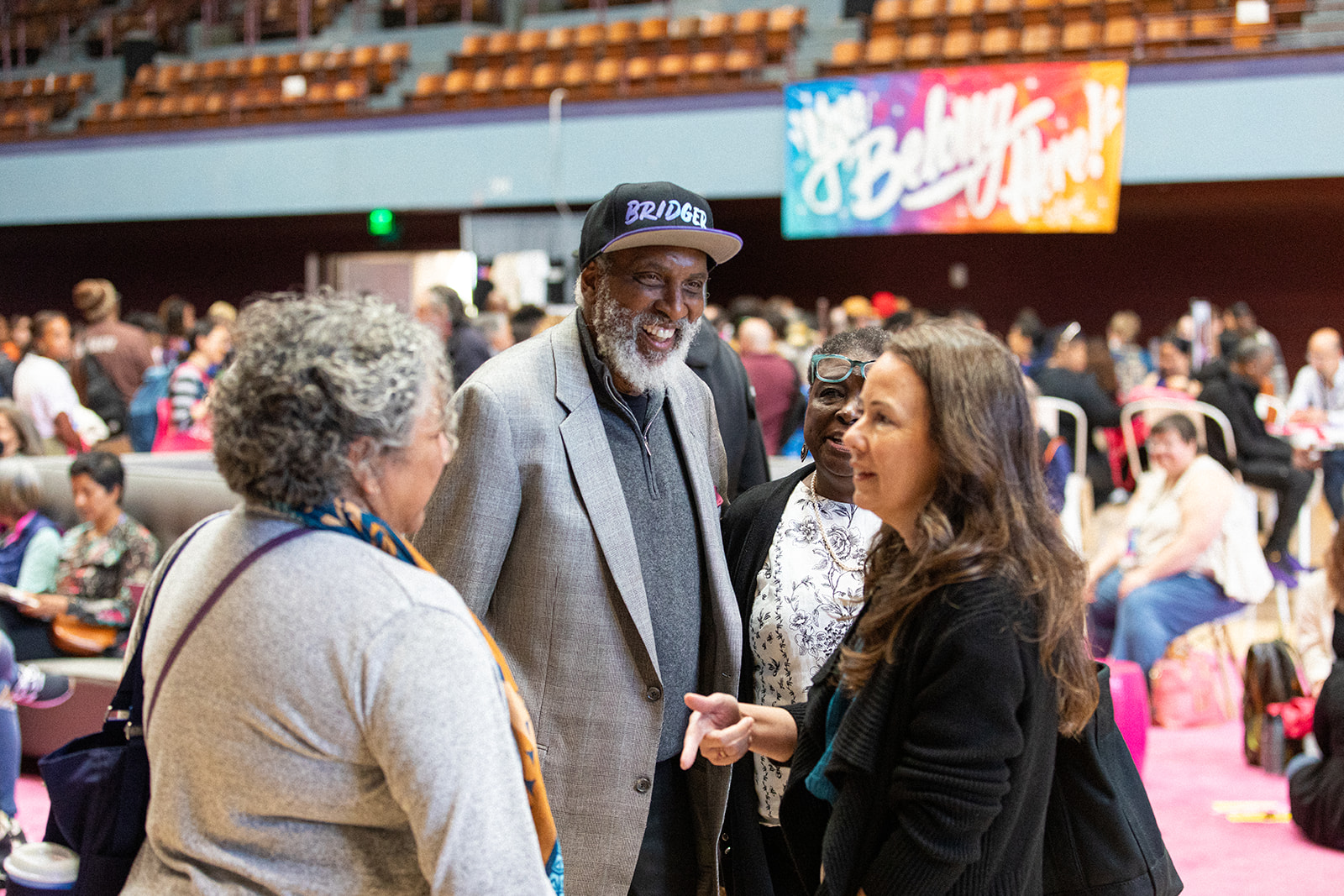
O&B24 Photo Gallery
by Nicholas Lea Bruno
Get excited for this year's conference by going through all the highlights, high life, and high fashion from our last gathering in Oakland, California in 2024.
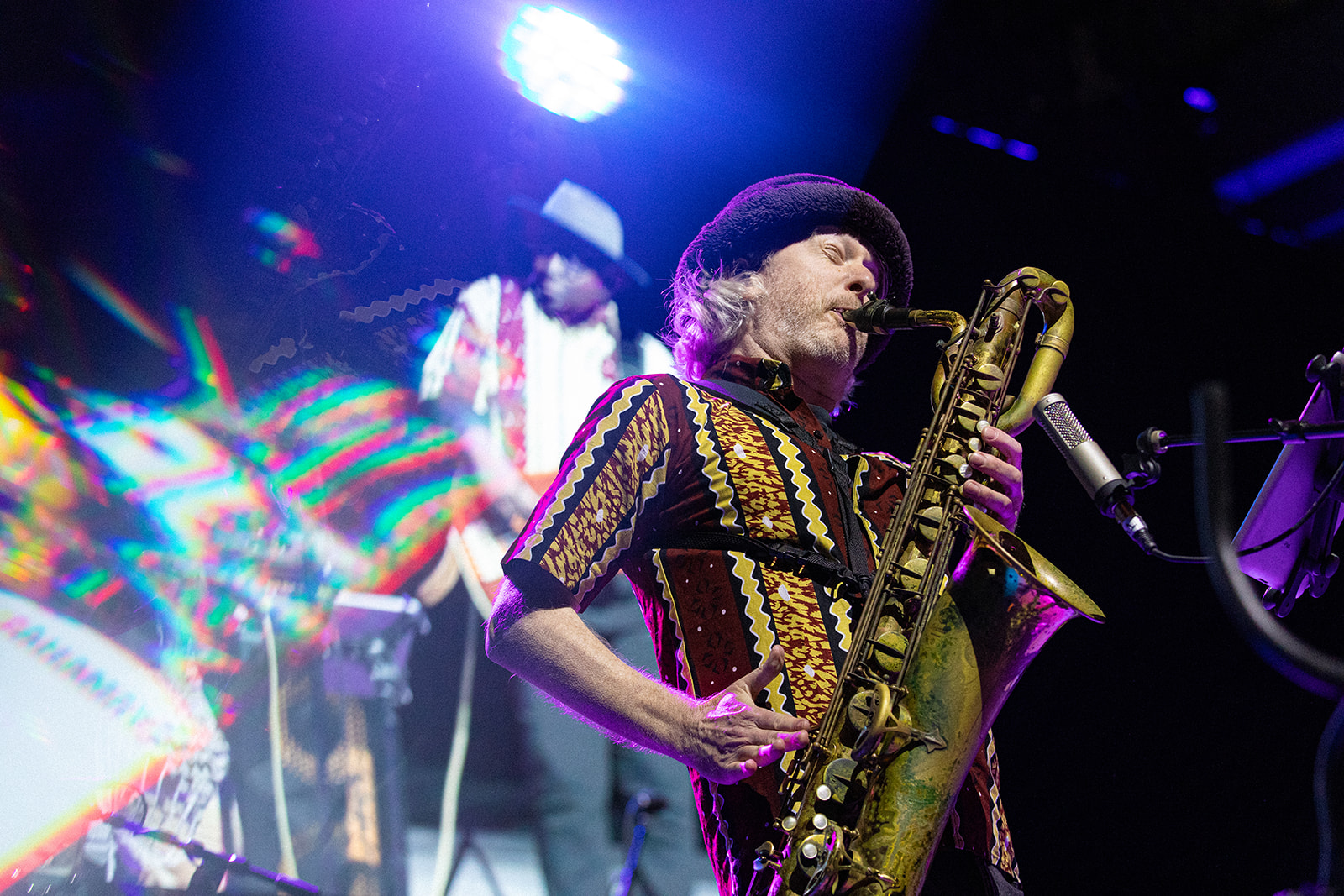
O&B24 Media Archive
Watch every session from the O&B24 conference in Oakland: mainstage talks from Astra Taylor and Ruth Wilson Gilmore; breakout sessions on expressions of belonging; performances from Destiny Muhammad and Patrick Willie; and so much more